
In today’s digital landscape, cyber threats evolve at a staggering pace. Businesses, regardless of size, face sophisticated cyberattacks that can disrupt operations, compromise sensitive data, and lead to significant financial losses. Traditionally, organisations have addressed these risks by building in-house cybersecurity teams, but this approach requires substantial resources and ongoing investment in talent, tools, and infrastructure.
Enter Cybersecurity as a Service (CSaaS)—a revolutionary model that offers comprehensive, scalable security solutions without the need for an in-house cybersecurity team. For small and medium-sized businesses (SMBs) or companies with limited IT resources, CSaaS provides a powerful, cost-effective alternative to managing security in-house.
What is Cybersecurity as a Service (CSaaS)?
CSaaS is a managed security model where businesses outsource their cybersecurity needs to an external provider.
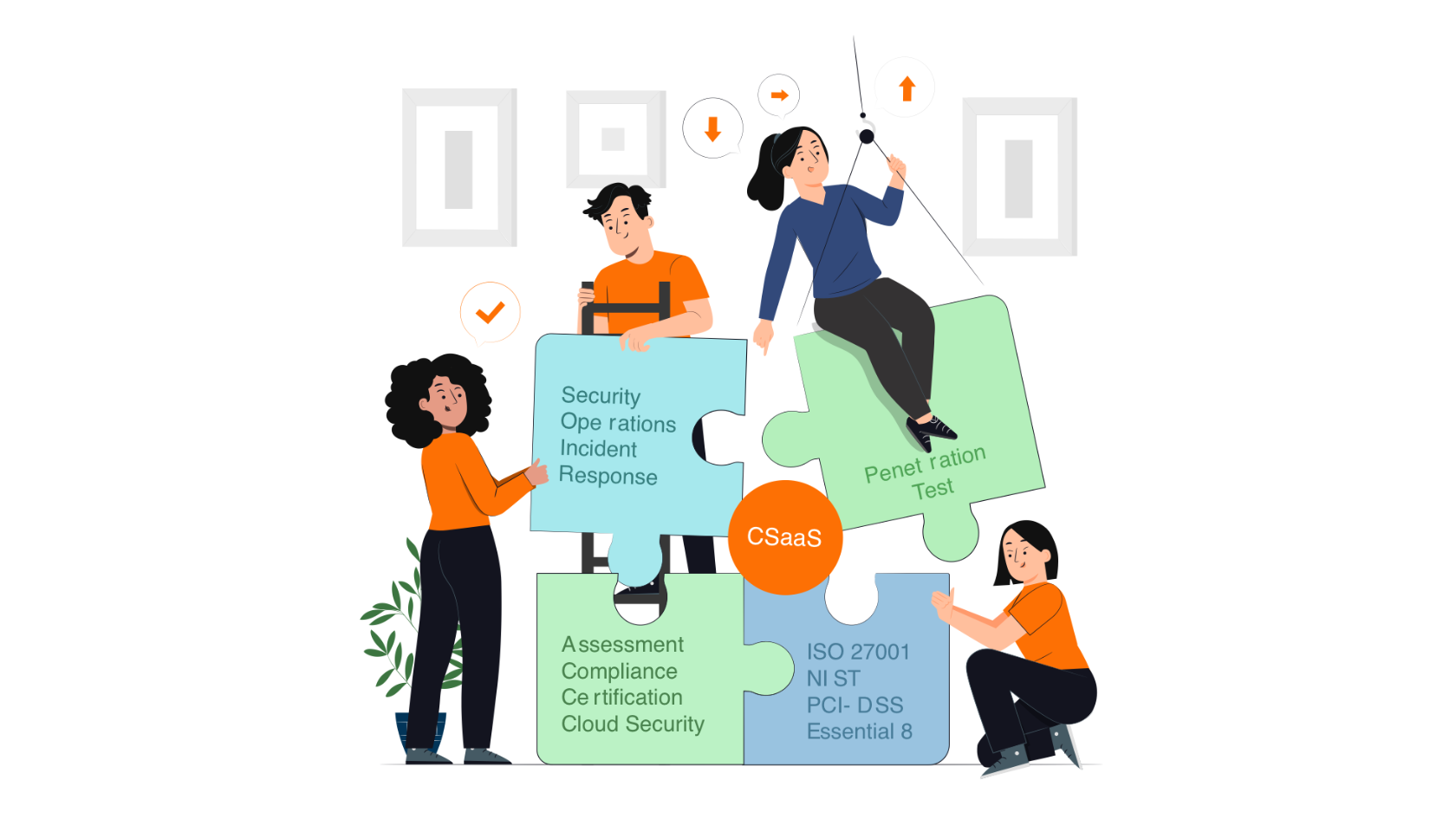
This service covers various security aspects, including:
- Threat detection and response
- Compliance management
- Vulnerability assessments
- Incident response and recovery
- Security training and awareness
- Continuous monitoring and risk management
By leveraging a CSaaS provider, businesses gain access to cutting-edge security expertise, advanced threat intelligence, and real-time monitoring, all without the burden of hiring and maintaining a full-time cybersecurity team.
Why CSaaS is a Game-Changer
Cost-Effective Security Solutions
Building an in-house cybersecurity team is a costly endeavour. The recruitment of security experts, ongoing training, and investments in infrastructure add up quickly. CSaaS reduces these overhead costs by offering a subscription-based model where businesses pay only for the services they need. This flexible pricing structure makes enterprise-level security accessible to SMBs and startups.
24/7 Threat Monitoring and Rapid Response
Cyber threats don’t follow business hours. Many organisations struggle to provide around-the-clock monitoring, leaving them vulnerable outside regular work hours. CSaaS providers operate on a 24/7 basis, continuously scanning for potential threats and responding quickly when they are detected. This proactive approach significantly reduces the risk of data breaches and system downtime.
Access to Industry Experts
Cybersecurity requires specialised knowledge that is constantly evolving. CSaaS providers employ security experts who stay ahead of emerging threats, compliance regulations, and best practices. Instead of relying on a limited internal team, businesses benefit from the expertise of professionals dedicated solely to cybersecurity.
Scalability and Flexibility
One of the biggest advantages of CSaaS is its adaptability. Businesses can scale security services up or down based on their needs. Whether you require basic threat monitoring or a comprehensive security suite, CSaaS helps you get the right level of protection without unnecessary expenses.
Seamless Compliance Management
Regulatory requirements for data protection and cybersecurity are constantly evolving. Non-compliance can result in severe penalties and reputational damage. CSaaS providers help businesses navigate complex compliance obligations such as the Privacy Act 1988, APRA CPS 234 and PCI DSS by keeping security policies, audits, and risk assessments consistently up to date.
Proactive Security Culture
Instead of treating cybersecurity as an afterthought, CSaaS integrates security into daily business operations. Through training programs, phishing simulations, and ongoing security awareness, employees become proactive participants in safeguarding company data. This cultural shift helps reduce human error—a common factor in security breaches.
CSaaS vs. Traditional Security Approaches
| Feature | Traditional In-House Security | Cybersecurity as a Service (CSaaS) |
|---|---|---|
| Cost | High upfront and ongoing expenses | Cost-effective subscription model |
| Expertise | Limited to in-house team’s knowledge | Access to a broad range of experts |
| Scalability | Difficult to scale quickly | Easily adjustable based on needs |
| Monitoring | Often limited to business hours | 24/7 monitoring and response |
| Compliance | Requires dedicated resources | Managed by experts with industry knowledge |
Is CSaaS Right for Your Business?
If your organisation lacks the budget or expertise to build an in-house cybersecurity team, CSaaS is an ideal solution. Here are a few signs that indicate your business could benefit from CSaaS:
- You struggle to keep up with evolving cyber threats and compliance requirements.
- Your IT team is overburdened with security responsibilities.
- You lack 24/7 security monitoring and rapid response capabilities.
- You want a cost-effective way to enhance your cybersecurity posture.
- You seek access to cutting-edge security technology without major investments.
Conclusion
In an era where data breach notifications in Australia have reached a record high, with 1,205 notified to the OAIC in 2025, Cybersecurity as a Service (CSaaS) is a game-changer for businesses looking to strengthen their security without the complexities and costs of an in-house team. With round-the-clock monitoring, expert-driven solutions, and a scalable approach, CSaaS allows companies to focus on growth and innovation—without compromising security.
With StickmanCyber’s Cybersecurity & Compliance Services, businesses can navigate the digital landscape with confidence, knowing their cybersecurity needs are in expert hands. Whether you’re a startup, a growing enterprise, or an established company seeking to optimise security, StickmanCyber’s CSaaS is a strategic move that delivers long-term protection and peace of mind.
Frequently asked questions
Is CSaaS the same as SOC as a service?
Not quite. SOC as a service focuses on one function: monitoring, detecting and responding to threats through an outsourced security operations centre. CSaaS is broader and can also cover compliance management, vulnerability assessments, security awareness training and risk management, so a SOC service is often one part of a CSaaS arrangement.
What should you ask a CSaaS provider before signing up?
ASD’s guidance on questions to ask managed service providers is a good starting point. It suggests asking whether the provider implements the Essential Eight, securely administers its systems, monitors activity on its systems and services, regularly assesses them for vulnerabilities, and is prepared to respond to cyber security incidents.
Does outsourcing cybersecurity transfer responsibility for a breach?
No. Outsourcing shifts the work, not the accountability. Organisations covered by the Privacy Act 1988 must still take reasonable steps to protect the personal information they hold, and APRA CPS 234 requires regulated entities to assess the information security capability of third parties that manage their information assets, with the Board ultimately responsible.
How quickly must an Australian business report a data breach?
Under the Notifiable Data Breaches scheme, organisations covered by the Privacy Act must take reasonable steps to assess a suspected eligible data breach within 30 days, and notify affected individuals and the OAIC as soon as practicable once they have reasonable grounds to believe one has occurred. Businesses with an annual turnover of $3 million or more must also report ransomware payments to ASD within 72 hours.
What cyber security basics should small businesses have in place?
ASD’s Annual Cyber Threat Report 2024–25 points small businesses to a few basics: use strong multi-factor authentication, keep software and devices updated, stay alert to phishing, and back up important data. ASD’s Essential Eight maturity model FAQ also suggests Maturity Level One may suit small to medium enterprises.